
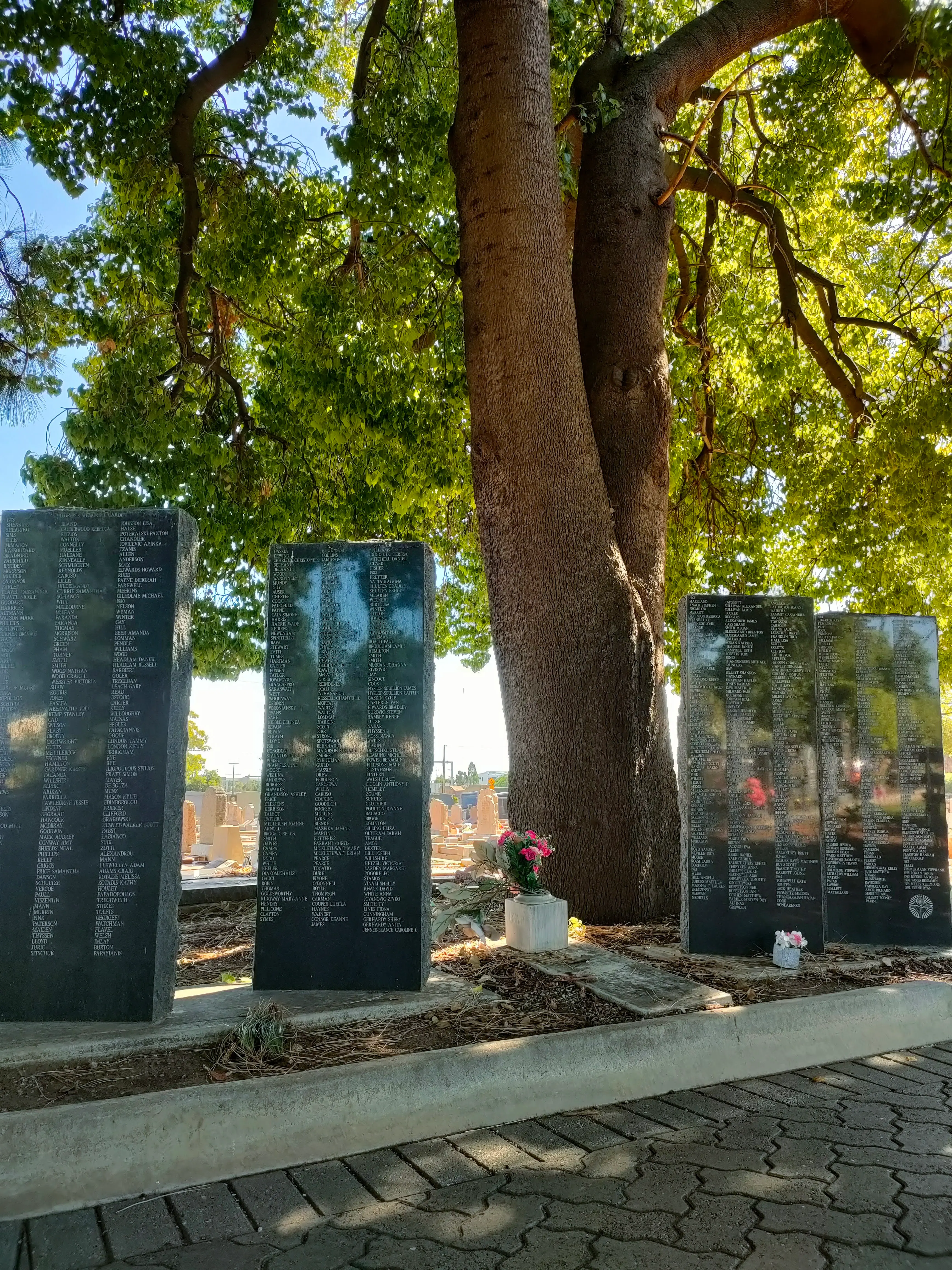
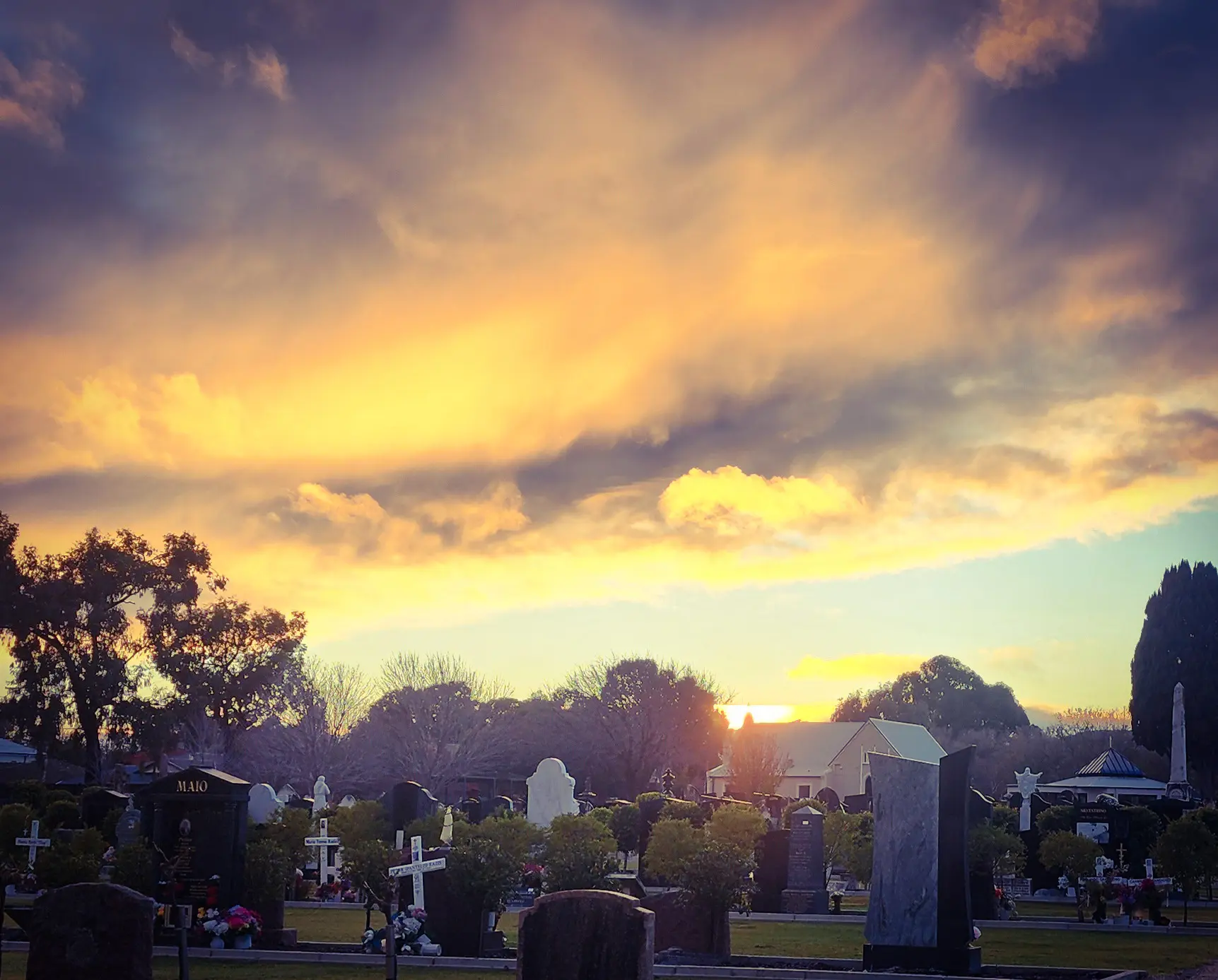
Dudley Park Cemetery
Discover the rich history and serene beauty of Dudley Park Cemetery, a cherished community landmark.

A rich history of rememberence and community connection
Discover Dudley Park Cemetery's heritage, from its early beginnings to its evolution as a cherished place of reflection within the methodist church, to the modern multicultural place community staple.
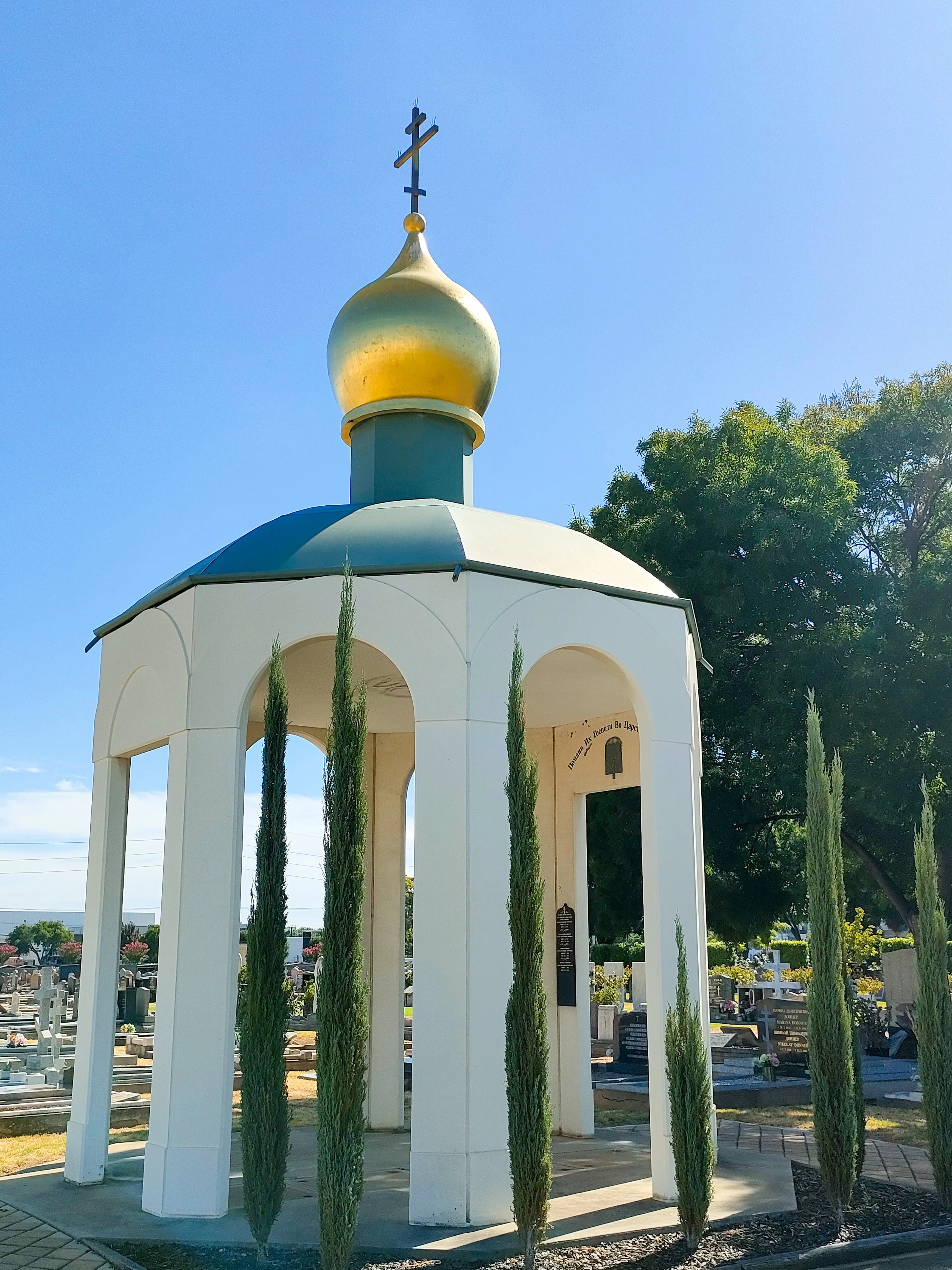
History of Dudley Park Cemetery
Dudley Park Cemetery, as it is known today, has undergone significant transformations over the centuries. Its origins trace back to 1845 when it was established on land known as Caroline Square within Islington by the Burdon family. This site initially served as the location for the Islington Methodist Church, which, by 1850, became the first Methodist church outside the center of Adelaide. Over time, the area developed into a small cemetery for the members of the church, with some of the earliest recorded burials being members of the Burdon family in 1864. Today, these original plots and memorials remain preserved within Caroline Gardens and can still be visited.
Records indicate that by 1879, internal difficulties within the Methodist Church had emerged, and the Islington congregation was burdened with significant debt. Between 1879 and 1885, there are no documented references to the Islington Methodist Church in publications from other Methodist factions. However, on October 17, 1882, The Advertiser published an article titled “Primitive Methodist Church, Islington,” detailing an offer made by John Chambers, a prominent landowner in Adelaide’s northern suburbs. Chambers offered a block of land—located in what is now Prospect—to any religious denomination willing to develop it immediately. The Methodist Church accepted this offer, allowing them to consolidate smaller congregations into a larger community.
By April 1902, the Prospect Circuit sought to assume ownership of the Islington parish, but this transition took several years to finalize. In 1911, the ‘Distressed Churches Management Fund’ provided financial relief on the condition that all administrative control be transferred to “The Circuit”, which still remains in place today and is known as the Payneham and Dudley Park Cemeteries trust. Meanwhile, the surrounding landscape underwent significant changes. As suburban expansion and railway developments progressed, the suburb of Dudley Park was established, replacing the name Islington. In response, the cemetery was officially renamed Dudley Park Cemetery in 1922.
Over time, the church premises in Prospect flourished and became increasingly more popular, while the cemetery church struggled to sustain itself and eventually closed being used as a cemetery storeroom and was eventually demolished in 1929. Due to the historical significance of Caroline Square, monuments from the site were relocated and incorporated into the Prospect church, which continued to grow, particularly with the addition of a hall in the 1950s. The New Islington Methodist Church formed into the Islington Uniting Church and today now serves as the Gurdwara Sarbat Khalsa Sikh Temple, located at 16-18 King Street, Prospect.
In recognition of this rich history, Caroline Gardens was developed as a burial and cremation site, commemorating the location of the former Methodist Church. In 1995, marking the 150th anniversary of its establishment, a Bauhinia (Orchid Tree) was planted among the memorials to honor the site's founders. This enduring tribute ensures that the legacy of the early Methodist community remains preserved for future generations.
Stories
At Dudley Park Cemetery we are always interested in the stories of those who rest with us.
Tilley Siblings
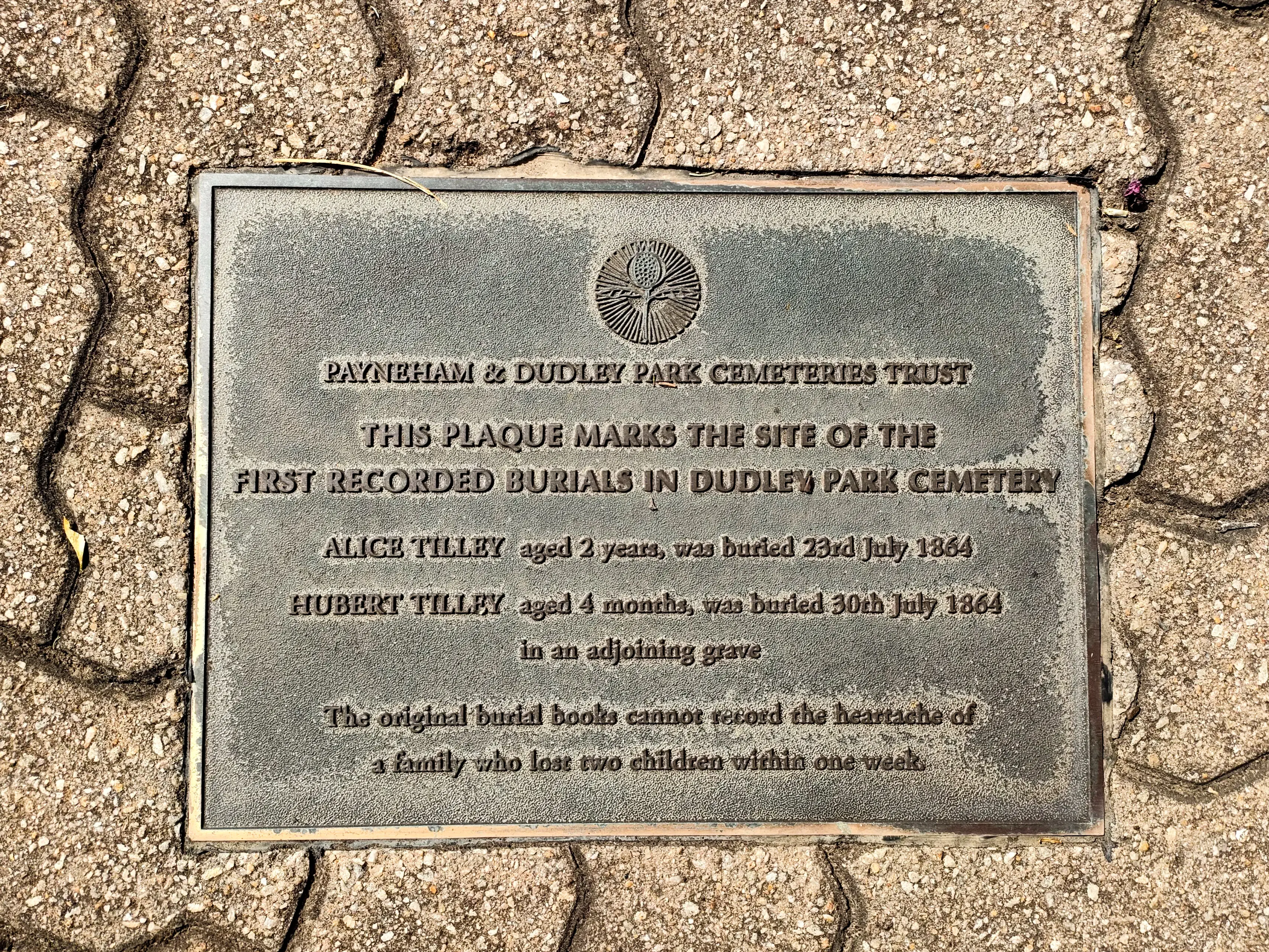
In the winter of 1864, a young family laid their two smallest children to rest within the grounds of what was then known as Islington Cemetery. Alice Tilley, just two years old, was the first to be buried on July 23rd, followed only seven days later by her baby brother Hubert, aged just four months. Side by side in adjoining graves, the Tilley siblings became the first ever recorded burials at what we know today as Dudley Park Cemetery — a distinction made possible by new regulations introduced that same year, which required cemeteries to formally record the name, age, and resting place of every person interred. Though Alice and Hubert lived brief and tender lives, their names were captured in ink at a time when many others went unrecorded, and it is that record which allows us to know them still.
Over 160 years later, their legacy lives on in more ways than one — the children's burial area within Dudley Park has been named the Tilley Garden in their honour, ensuring that two of the cemetery's smallest and earliest souls are forever woven into its story. A plaque placed in the family's memory can also be found on the path leading to the Pine Tree Memorial and Pond — a quiet reminder that even the smallest lives leave a lasting mark.
Sharing your stories
If you would like to share the stories about a person resting at Dudley Park Cemetery, or a Story behind a monument we would be delighted to hear from you. Submit your story today and have your loved one's legacy solidified in the history of Dudley Park Cemetery.
War graves
The list pertains to graves that are registered with the Office of Australian War Graves. We deeply respects and honour all those who have served in the Australian Armed Forces, recognising their dedication and sacrifice in service to our nation